Roof replacement financing East Bay homeowners actually use comes in several forms — contractor programs, bank loans, credit cards, and home equity lines. Each has trade-offs in speed, rates, and risk. This guide helps you compare them so you can make the right call for your situation.
Most Bay Area roof replacements run between $15,000 and $35,000. That's not money most families have sitting around. Financing isn't a sign of financial trouble — it's how working homeowners protect their homes without draining savings or maxing out credit cards.
At a glance
- Know your four main options — contractor financing, personal loans, credit cards, and HELOCs each have different approval processes, costs, and risk levels.
- Ask the right questions — rates, prepayment penalties, what happens if project scope changes, and who you'll actually be talking to throughout the work.
- Understand the approval process — ask how prequalification works and whether it uses a soft or hard credit pull.
- Connect financing to execution — the contractor's permit process and communication structure matter as much as the loan terms.
- Watch for red flags — pressure tactics, vague fees, and no clear answer on scope changes signal problems.
Why East Bay Homeowners Finance Roof Replacements
Short answer: Bay Area roofing costs are high, most homeowners don't have $20K+ in cash, and financing lets you fix the problem now instead of waiting until small damage becomes structural failure.
A leaky roof doesn't wait for your savings account to catch up. Water damage spreads. What starts as a $3,000 repair becomes a $25,000 replacement if you delay six months. Mold grows. Framing rots. Insurance claims get complicated.
Financing makes sense in three common situations:
Emergency repairs. Your roof is leaking now. You need it fixed this week, not in six months when you've saved up. Financing lets you move fast without draining emergency funds.
Pre-sale preparation. A new roof can add significant value to your home — and it removes a major red flag that kills deals during inspection. Financing the upgrade before listing lets you recoup the investment at closing.
Energy upgrades. Modern roofing materials and proper insulation can lower your utility bills. Financing lets you capture those savings immediately rather than waiting to pay cash.
Four Ways to Pay for Roof Replacement Financing East Bay Homeowners Use
Short answer: Contractor financing, personal loans, credit cards, and HELOCs are your main options. Each has different approval processes, costs, and risk levels.
Contractor Financing Programs
Most roofing contractors partner with third-party lenders to offer financing directly. You apply through the contractor.
The upside: simplicity. You're dealing with one company for both the roof and the financing.
The downside: rates vary widely. "Competitive rates" can mean anything. Ask for specific numbers before you commit.
Personal Loans from Banks or Credit Unions
Traditional unsecured personal loans work for roof replacement, but the process is slower. Banks do hard credit pulls, approval takes days or weeks, and you'll need strong credit for the best rates.
The upside: if you have excellent credit, you may get better terms than contractor programs offer. Credit unions sometimes offer especially competitive rates for members, with home improvement loans averaging 1-2% lower than traditional banks according to the National Credit Union Administration.
The downside: timing. If your roof is leaking, waiting two weeks for bank approval isn't practical.
Credit Cards
Credit cards are the fastest option — you already have the credit line. But they're also the most expensive for anything larger than a minor repair. According to the Federal Reserve's most recent data, average credit card interest rates exceed 20% APR, which means a $20,000 roof could cost you thousands in interest.
Some homeowners use 0% introductory APR cards for smaller projects, paying off the balance before the promotional period ends. For full roof replacements, it's rarely the smart choice.
Home Equity Line of Credit (HELOC)
A HELOC uses your home as collateral, which typically means the lowest interest rates available. But it comes with serious trade-offs.
According to the Consumer Financial Protection Bureau, HELOC applications typically take 2–6 weeks to process. The lender does a hard credit pull. And if you can't make payments, you risk losing your home.
For homeowners with significant equity and no urgency, HELOCs can make sense. For emergency repairs or anyone uncomfortable putting their home on the line, contractor financing is usually the better path.
How to Compare Roof Financing Options
Short answer: Ask about rates, approval process, credit impact, flexibility, and who you'll actually be talking to throughout the project.
Don't just ask "do you offer financing?" Ask these specific questions:
Questions About Rates and Terms
- What's the APR range? (Not "competitive" — the actual percentage.)
- Is the rate fixed or variable?
- What would my monthly payment be on a $20,000 project?
- What term lengths are available?
A contractor who can't answer these questions clearly either doesn't understand their financing program or doesn't want you to understand it. Neither is a good sign.
Questions About Approval and Credit Impact
- Does prequalification use a soft or hard credit pull?
- What credit score is typically needed to qualify?
- How long does approval take?
- What happens if I'm declined?
Ask before you apply, because the type of inquiry matters. The Consumer Financial Protection Bureau confirms that soft inquiries don't affect your credit score — the hard pull happens only if you accept the loan.
Questions About Flexibility
- Are there prepayment penalties if I pay off early?
- What happens if the project scope changes and costs more than the original quote?
- Can the financing be adjusted mid-project?
Change orders happen in roofing. Hidden water damage, rotted framing, code-required upgrades — sometimes the job costs more than the initial estimate. Ask how financing handles that before you sign anything.
Questions About the Process
- Who explains the financing terms to me?
- Will I be talking to the contractor or a separate lender?
- Does financing affect when my project can be scheduled?
What Happens If You Don't Qualify
Short answer: You have options — co-signers, alternative lenders, smaller project scopes, or phased repairs.
Not qualifying isn't the end of the conversation. Here's what you can do:
Apply with a co-signer. A family member with stronger credit can help you qualify for better terms.
Try alternative lenders. Some specialize in home improvement financing for buyers with credit challenges. Rates will be higher, but approval is more accessible.
Finance a smaller scope. If a full replacement is out of reach, finance the most urgent repairs now. Address the leak, stabilize the situation, and plan for the full replacement when your credit improves.
Improve your credit first. If your roof can wait a few months, paying down existing debt or correcting credit report errors can move you into a better qualifying bracket.
A good contractor will help you think through these options rather than just moving on to the next lead.
How Financing Connects to Your Roofing Project
Short answer: Financing isn't separate from the roofing work — it affects permits, scheduling, and who you're communicating with throughout the project.
Permits, Inspections, and Payment Timing
In the Bay Area, most roof replacements require permits. The city inspects the work before it's signed off. Some financing structures tie payment disbursement to inspection milestones — meaning the lender releases funds only after certain stages are complete.
This is actually a protection for you, but it means the contractor's permit process matters. At Jacob Construction, we handle permits on approximately 90% of jobs, so you're not navigating city requirements on your own while also managing a loan.
Why One Point of Contact Matters When Money Is Involved
Here's where financing conversations often go sideways: the contractor hands you off to a third-party lender. Now you're talking to someone who knows financing but doesn't know roofing. When you have questions about how payment timing affects project scheduling, nobody has the full picture.
At Jacob Construction, the same person who explains your financing options is your project manager from start to finish. One relationship. One phone number. No handoffs between "the financing department" and "the roofing department."
When money is involved, that continuity matters.
Red Flags in Roofing Financing Offers
Short answer: Watch for pressure tactics, vague fees, and contractors who can't explain what happens when plans change.
Pressure to Decide Before You Understand Terms
Legitimate financing gives you time to read the terms, ask questions, and compare options. If a contractor pushes you to sign today or lose the deal, that's a warning sign. The Federal Trade Commission's guidance on home improvement contracts specifically warns homeowners about high-pressure sales tactics.
Vague or Hidden Fees
Origination fees, late payment fees, prepayment penalties — these should all be disclosed upfront, in writing, before you commit. "We'll go over that later" is not an acceptable answer.
No Clear Answer on What Happens If Scope Changes
Roofing projects sometimes reveal hidden damage. A contractor who can't explain how their financing handles change orders either hasn't thought it through or doesn't want you to think it through.
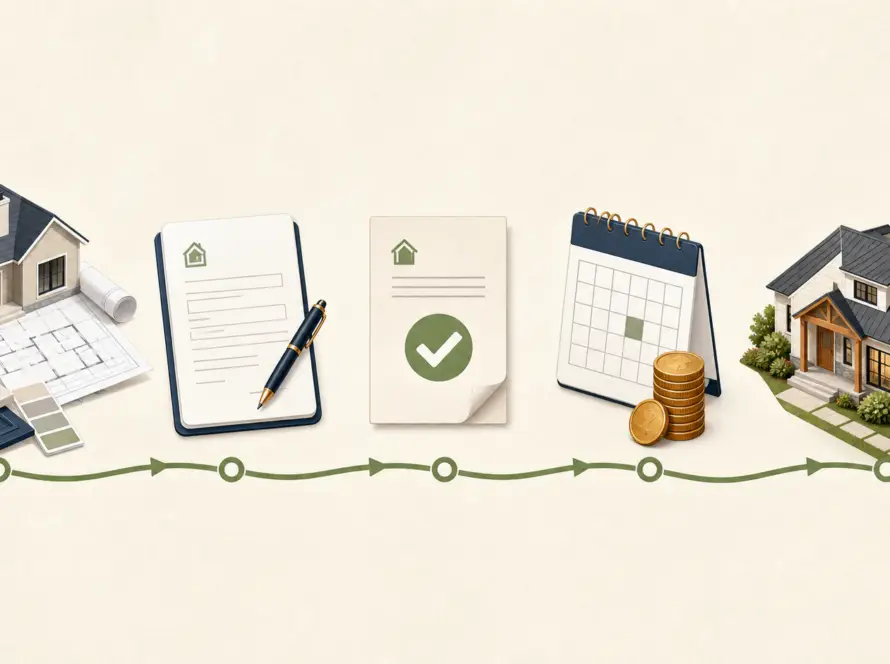
Getting Started: What to Expect
Short answer: Assessment first, then financing review, then project scheduling — with one person guiding you through all of it.
The Assessment
A roofing contractor inspects your roof, identifies the scope of work, and provides an estimate. This happens before financing is finalized. You need to know what the project actually costs before you can evaluate financing options.
Reviewing Your Options
With the estimate in hand, compare financing terms. Ask the questions from this guide. Make sure you understand what your monthly payment will actually be — not a range, not "approximately," but a real number.
Moving Forward
Once financing is approved, project scheduling begins. In the Bay Area, permit timelines matter. We handle that process so you're not calling the city while also tracking loan paperwork.
Throughout all of this, you should have one person to call with questions. That's how we work at Jacob Construction — the person who walks you through financing is the same person managing your project through completion.
Compare Your Options, Then Talk to Someone Who Can Answer Your Questions
The right roof replacement financing East Bay homeowners choose depends on timeline, credit, and comfort with risk.
But the financing decision shouldn't be separate from the contractor decision. The company handling your roof should also be able to explain your payment options clearly — and stay with you from that first conversation through final inspection.
If you're facing a roof replacement and want to understand your financing options, we're here to help. Jacob Construction offers financing options (subject to credit approval), and the same person who explains your options manages your project from start to finish.
Request a quote to get a free assessment and see what financing looks like for your specific situation.
Or call 415-779-8958 to talk through your options with someone who can answer both roofing questions and financing questions — because it shouldn't take two phone calls to get a straight answer.
Related Resources
- How Home Improvement Financing Works
- Home Repair Financing in the Bay Area
- How Bay Area Homeowners Pay for Urgent Home Fixes
- Our Roofing Services
Sources
-
National Credit Union Administration — Consumer Resources: https://www.ncua.gov/consumers
-
Federal Reserve — Consumer Credit Report (G.19): https://www.federalreserve.gov/releases/g19/current/
-
Consumer Financial Protection Bureau — What is a Home Equity Line of Credit?: https://www.consumerfinance.gov/ask-cfpb/what-is-a-home-equity-line-of-credit-en-106/
-
Consumer Financial Protection Bureau — What is a Credit Inquiry?: https://www.consumerfinance.gov/ask-cfpb/what-is-a-credit-inquiry-en-1317/
-
Federal Trade Commission — Home Improvement Scams: https://consumer.ftc.gov/articles/home-improvement-scams