Gas to electric HVAC Bay Area conversions are becoming one of the most common upgrade projects we see—and for good reason. Between rising gas costs, California’s push toward electrification, and the efficiency gains of modern heat pump technology, more homeowners are ready to make the switch. The question most people get stuck on isn’t whether it’s a good idea. It’s how to pay for it.
You don’t have to drain your savings or wait until you’ve saved up the full amount. Several financing programs exist specifically for projects like this—state programs, local clean energy programs, and contractor-offered financing that lets you pay over time.
This guide walks you through what a gas-to-electric conversion actually involves, which financing options are available to Bay Area homeowners, and what to look for in a contractor who can handle the full project—permits, paperwork, and all.
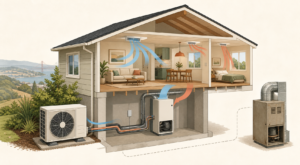
At a glance
- Electrification is gaining momentum — California incentives, better heat pump technology, and rising gas costs are pushing Bay Area homeowners to switch from gas to electric HVAC.
- Financing makes it affordable — GoGreen Financing, local clean energy programs, and contractor-offered financing let you pay over time.
- The project involves more than equipment — expect old system removal, heat pump installation, possible electrical panel upgrades, and multiple permits.
- Contractor choice matters — look for a licensed contractor who handles permits, navigates financing, and gives you one point of contact throughout.
- Federal tax credits stack with financing — the 25C credit offers up to $2,000 for qualifying heat pumps, which you can apply to pay down your loan faster.
Why Bay Area Homeowners Are Switching from Gas to Electric HVAC
Short answer: California’s electrification incentives, improving heat pump technology, and the desire to lower both utility bills and carbon footprint are driving the shift. For many homeowners, a failing gas furnace becomes the trigger to make the switch rather than replace with another gas system.
What’s Driving the Gas-to-Electric Trend
California has been steadily pushing toward building electrification for years. Building codes increasingly favor electric systems, and rebate programs reward homeowners who switch from gas to electric heating and cooling. The California Energy Commission’s Building Energy Efficiency Standards have progressively encouraged heat pump adoption, and state incentive programs continue to expand.
Heat pump technology has improved dramatically. According to the U.S. Department of Energy, today’s heat pumps can reduce electricity use for heating by approximately 50% compared to electric resistance heating—and they serve as both heating and cooling systems, replacing your furnace and AC with a single, more efficient unit.
Then there’s the practical side: PG&E gas rates have been climbing, and many Bay Area homeowners are looking to reduce their reliance on gas service altogether—especially those in Oakland, Fremont, or San Jose who already have solar panels and want to maximize their investment.
Is Your Home a Good Candidate for Electrification?
Not every home requires the same scope of work. A few factors affect how straightforward your conversion will be:
- Age of your current system: If your gas furnace or AC is 15-20 years old and struggling, you’re already facing a replacement. Converting to electric makes sense now rather than investing in another gas system.
- Ductwork condition: If you have existing ductwork in good shape, a ducted heat pump can use it. If your ducts are damaged or your home doesn’t have them, a ductless mini-split system might be the better fit.
- Electrical panel capacity: This is the big one. Many older Bay Area homes—especially those built before the 1980s in cities like Fremont, San Lorenzo, and Pacifica—have 100-amp electrical panels that often aren’t sufficient for a heat pump plus other electric loads. An upgrade to 200 amps may be required.
A good contractor will assess all of this during your initial evaluation—before you commit to anything.
What a Gas-to-Electric HVAC Conversion Actually Involves
Short answer: This isn’t a simple equipment swap. A conversion typically includes removing the old gas system, installing the heat pump, potentially upgrading your electrical panel, and pulling multiple permits. The scope depends on your home’s current setup.
Removing the Old Gas System
Your existing gas furnace and AC unit will be disconnected and removed. Depending on local requirements, the gas line serving the furnace may need to be capped or modified. This work requires permits and inspection.
Installing the Heat Pump System
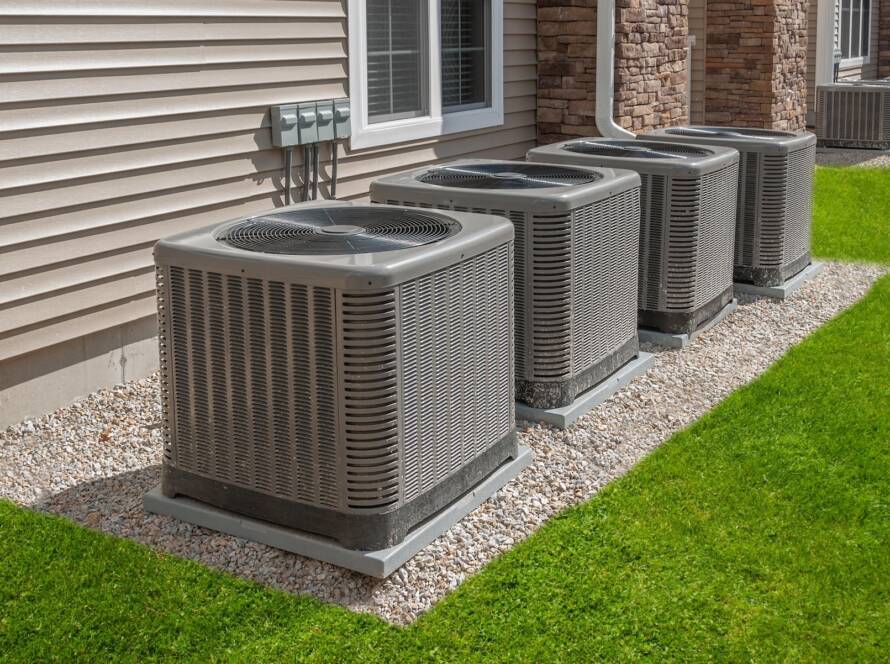
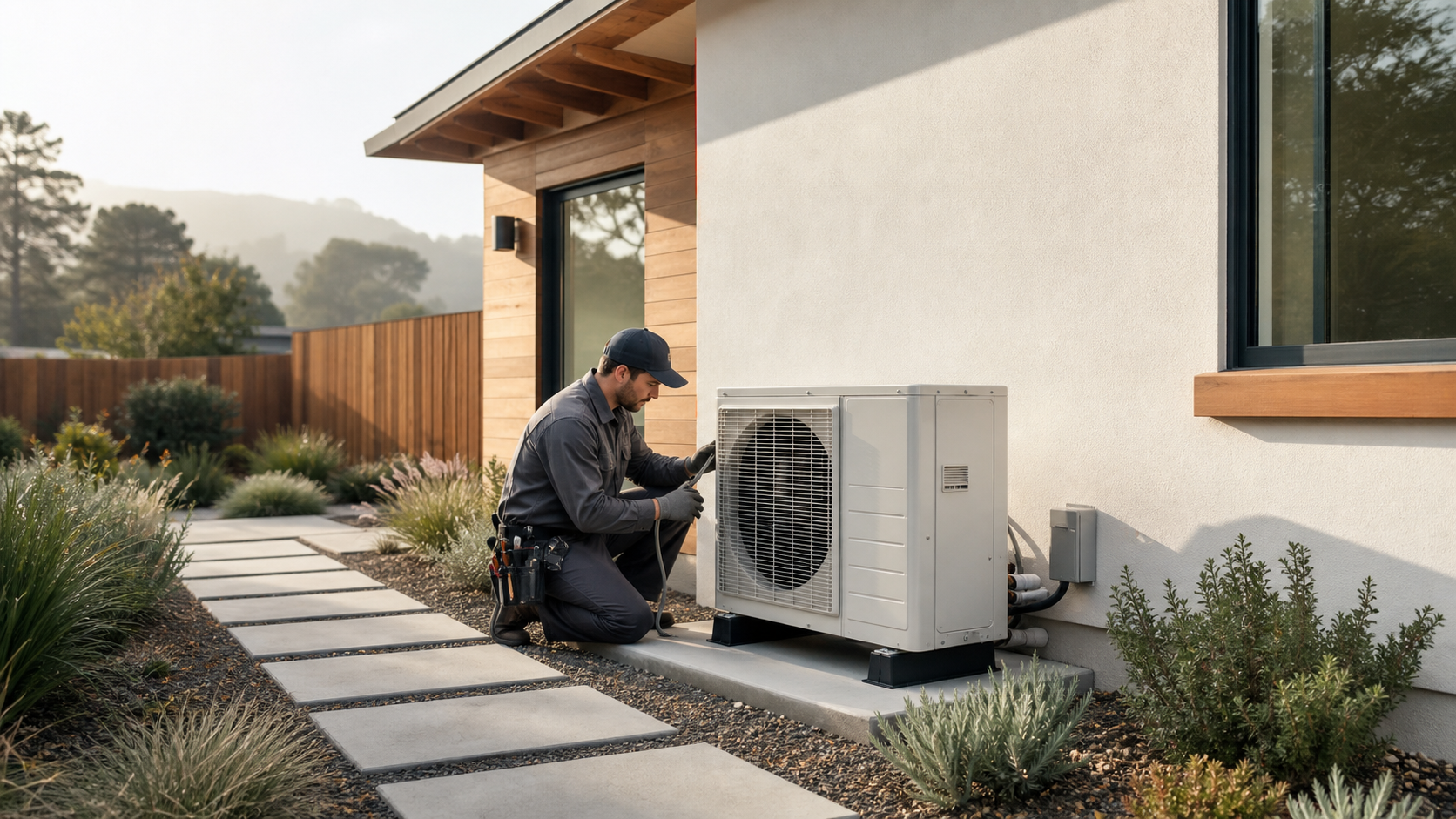
Heat pumps have two main components: an outdoor compressor unit and an indoor air handler. For homes with ductwork, the indoor unit connects to your existing ducts. For homes without ducts—or where ductwork is in poor condition—a ductless mini-split system uses individual wall-mounted units in each zone.
Most installations also include a new thermostat, often a smart thermostat that optimizes the system’s efficiency.
Electrical Panel and Wiring Upgrades
Heat pumps require dedicated electrical circuits, and if your panel is already near capacity (common in homes built before the 1990s), you’ll need an upgrade.
A panel upgrade from 100 amps to 200 amps is a significant but common addition to electrification projects. It adds cost, but it’s often required—and it also positions your home for future electric vehicle charging or other upgrades.
Permits and Inspections in the Bay Area
Gas-to-electric HVAC Bay Area projects require permits. You’ll typically need building permits for the HVAC installation, electrical permits for panel and wiring work, and possibly mechanical permits depending on your city.
This is one of the areas where your choice of contractor matters most. At Jacob Construction, we handle permits on roughly 90% of our projects—so you’re not dealing with the city or chasing down inspections yourself. Whether you’re in San Francisco, Oakland, Fremont, or anywhere else in the Bay Area, we manage the paperwork so you don’t have to.
How to Finance a Heat Pump Conversion in the Bay Area
Short answer: Bay Area homeowners have access to state programs like GoGreen Financing, local programs from Peninsula Clean Energy and Silicon Valley Clean Energy, contractor-offered financing, and federal tax credits that can be combined with financing to reduce total cost.
GoGreen Financing (California Statewide)
GoGreen Financing is a state-supported program designed specifically for energy-efficient home upgrades, including heat pumps, ductless mini-splits, and related HVAC work.
You apply through a participating private lender—not the state directly. Loans are available for equipment, labor, and related work, often without requiring your home as collateral. Your contractor helps scope the project and provides documentation, but the financing application goes through the lender.
Peninsula Clean Energy (San Mateo County)
If you’re in San Mateo County—Pacifica, Daly City, Redwood City, or surrounding areas—Peninsula Clean Energy offers financing programs for clean energy upgrades, including heat pump installations. These programs are designed to make electrification more accessible with competitive rates for qualifying projects.
Silicon Valley Clean Energy (Santa Clara County)
Santa Clara County homeowners—in San Jose, Sunnyvale, Mountain View, and surrounding cities—can access similar programs through Silicon Valley Clean Energy, which supports electrification projects and heat pump conversions with affordable financing options.
Contractor-Offered Financing: Pay Over Time
You don’t have to qualify for a government program to finance your project.
At Jacob Construction, financing is available, so you can pay for your heat pump conversion over time with monthly payment plans. Your project manager walks you through the options and the exact terms before you sign.
To be clear: this isn’t “free.” You’re financing the project, and approval depends on your credit. But for homeowners who need the work done now and can’t write a five-figure check, this is often the most practical path forward. Learn more about how home improvement financing works and what home improvement financing options actually look like.
Federal Tax Credits and Rebates That Stack with Financing
Financing doesn’t prevent you from claiming federal incentives. According to the U.S. Department of Energy, the Energy Efficient Home Improvement Credit (25C) allows homeowners to claim up to $2,000 for qualifying heat pump installations. Additional rebates through the Inflation Reduction Act are being rolled out through state programs—check the ENERGY STAR Rebate Finder for current availability in your area.
Many homeowners finance the project, then apply these credits and rebates to pay down the loan faster—reducing the total amount paid over time.
What to Look for in a Contractor for Gas to Electric HVAC Bay Area Projects
Short answer: Electrification projects are more complex than standard HVAC replacements. Look for a licensed contractor with electrification experience, a track record you can verify, and one who handles permits and helps navigate financing—not just someone who installs equipment.
Licensed and Experienced with Electrification Projects
Any contractor you consider should be licensed in California and experienced specifically with heat pump installations and gas-to-electric conversions. This isn’t the same as general HVAC work—electrification involves coordination between HVAC, electrical, and sometimes gas work.
Jacob Construction is licensed (License #1073757) and works across the Bay Area, from San Francisco to San Jose, Fremont to Oakland, and the surrounding communities.
Handles Permits and Paperwork
Electrification projects require multiple permits—HVAC, electrical, sometimes gas. If you’re handling permits yourself, you’re spending time at city offices, tracking inspection schedules, and navigating bureaucracy.
We handle permits on the vast majority of our projects. When you work with us, you’re not dealing with the city—we are.
Helps Navigate Financing Options
The best contractors don’t just install equipment—they help you figure out how to pay for it. That means understanding which programs you might qualify for, providing the documentation lenders need, and explaining options like contractor-offered financing.
One Point of Contact Throughout the Project
Complex projects need clear communication. At Jacob Construction, the person who gives you your quote is your project manager through completion. You’re not passed between salespeople, schedulers, and technicians. One person, start to finish.
A Track Record You Can Verify
Trust matters—especially on a project this significant. We maintain an A+ rating with the Better Business Bureau and a track record of Bay Area homeowners who describe our work as “professional, punctual, and thorough” and “handled perfectly and professionally.”
If you’re evaluating contractors, our guide on choosing an HVAC contractor in the Bay Area can help.
What Does a Gas-to-Electric HVAC Conversion Cost?
Short answer: Costs vary based on home size, system type, and whether electrical panel upgrades are needed—but financing changes how you experience that cost, turning a large upfront bill into manageable monthly payments.
Equipment and Installation Costs
Heat pump systems range widely in price depending on efficiency rating, capacity, and whether you’re installing a ducted system or ductless mini-splits. Higher-efficiency systems and ductless multi-zone configurations typically cost more than basic single-zone installations.
Electrical Panel Upgrade Costs
If your home needs a panel upgrade from 100 amps to 200 amps, this adds to the project cost. The exact amount depends on your home’s wiring condition and local permit requirements.
How Financing Changes the Math
Instead of paying the full amount at completion, you’re looking at monthly payments structured to fit your budget. And because heat pumps are significantly more efficient than gas furnaces, your energy bills typically drop. The efficiency gains often offset a meaningful portion of the monthly payment.
Ready to Explore a Gas-to-Electric Conversion?
If your gas furnace is aging, your AC is struggling, or you’re simply ready to stop paying PG&E for gas you’d rather not use—a heat pump conversion might be the right move.
At Jacob Construction, we help Bay Area homeowners navigate the full process: assessing whether your home is a good candidate, handling permits, and helping you understand financing options, including monthly payment plans.
Request a free quote to start the conversation. We’ll evaluate your home, walk through your options, and give you a clear picture of what the project would involve—with no obligation.
You can also call us directly at 415-779-8958.
Frequently Asked Questions
Can I finance a gas-to-electric HVAC conversion?
Yes, several financing options exist—GoGreen Financing, local clean energy programs, and contractor-offered financing (subject to credit approval).
Do I need to upgrade my electrical panel to install a heat pump?
Many older Bay Area homes (especially those with 100-amp panels) need an upgrade to 200 amps. A good contractor will assess this during the initial evaluation.
What permits are required for a gas-to-electric conversion?
Typically building permits for HVAC installation, electrical work, and gas line modifications. A full-service contractor handles permitting so you don’t deal with the city.
Can I combine financing with federal tax credits or rebates?
Yes. Many homeowners finance the project, then apply rebates or tax credits (like the 25C credit, up to $2,000 for heat pumps) to pay down the loan faster.
Sources
- California Energy Commission — Building Energy Efficiency Standards: https://www.energy.ca.gov/programs-and-topics/programs/building-energy-efficiency-standards
- U.S. Department of Energy — Heat Pump Systems: https://www.energy.gov/energysaver/heat-pump-systems
- GoGreen Financing — California Statewide Program: https://gogreenfinancing.com/
- Peninsula Clean Energy — San Mateo County: https://www.peninsulacleanenergy.com/
- Silicon Valley Clean Energy — Santa Clara County: https://svcleanenergy.org/
- U.S. Department of Energy — Clean Energy Tax Credits for Consumers: https://www.energy.gov/policy/articles/making-our-homes-more-efficient-clean-energy-tax-credits-consumers
- ENERGY STAR Rebate Finder: https://www.energystar.gov/rebate-finder