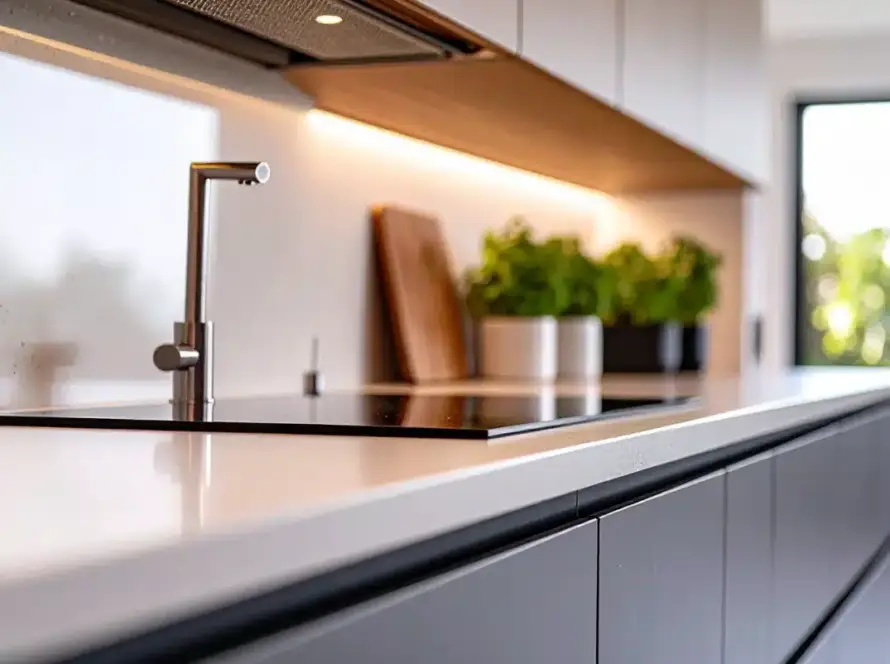
Finding the right Bay Area kitchen remodeler is the single most important decision you'll make for your project—more important than the countertop material, the cabinet style, or even the budget. The wrong contractor can turn a six-week remodel into a six-month headache. The right one makes the whole process feel manageable, even when surprises show up behind your walls.
At a glance
- Verify licensing first — California law requires contractors to be licensed for any project over $500, and you can check any license in 60 seconds through the CSLB.
- Ask who handles permits — some contractors manage the entire permitting process, while others leave it to you; know which type you're hiring.
- Clarify your point of contact — the best arrangement is one person from sale through completion, not a rotating cast of project managers.
- Understand the change-order policy — surprises happen in older Bay Area homes, so ask how the contractor communicates and documents unexpected issues.
- Request local references — online reviews help, but direct conversations with past clients tell you more about what to expect.
This guide gives you seven questions to ask any contractor before you sign. Use them to build your shortlist, compare quotes fairly, and protect your investment.
Why Choosing the Right Kitchen Remodeler Matters More Than Price
Short answer: A low bid means nothing if the contractor doesn't finish the job, communicate clearly, or stand behind their work. The real cost of a bad hire shows up in delays, repairs, and stress.
It's tempting to go with the cheapest quote. But kitchen remodels involve licensed electrical work, plumbing, and sometimes structural changes—all of which require permits, inspections, and skilled execution. When something goes wrong with an unlicensed or unreliable contractor, you pay twice: once for the original work, and again to fix it.
The seven questions below help you evaluate contractors on what actually matters: accountability, process, and trust.
The Hidden Costs of Hiring the Wrong Contractor
The most common problems homeowners report aren't about workmanship alone—they're about communication and follow-through. Contractors who don't return calls. Projects that stall for weeks with no explanation. Change orders that appear without warning. Permit issues discovered when you try to sell.
These problems don't show up in a quote. They show up six weeks in, when you're living without a kitchen and wondering why no one's answering your texts.
Question 1—Are You Licensed and Insured in California?
Short answer: Every contractor performing kitchen remodel work in California must hold a valid license from the Contractors State License Board (CSLB). Ask for the license number and verify it yourself.
California law requires contractors to be licensed for any project over $500, including labor and materials combined.[^1] A valid license means the contractor has met minimum experience requirements, passed exams, and carries a bond that protects you if something goes wrong.
Ask for the license number upfront. Then verify it.
How to Verify a Contractor's License in 60 Seconds
Go to the California CSLB license lookup tool and enter the license number. You'll see the license status, any complaints or disciplinary actions, and whether the contractor's bond and insurance are current.[^2]
Jacob Construction holds California License #1073757. That's the kind of verifiable credential you're looking for—something you can check independently, not just a claim on a website.
Question 2—Who Handles the Permits?
Short answer: Kitchen remodels in Bay Area cities typically require permits for electrical, plumbing, and structural work. Ask whether the contractor pulls permits for you or expects you to handle it yourself.
Permits exist to protect you. They ensure the work meets safety codes and gets inspected by the city. But dealing with Oakland, Berkeley, San Francisco, or other Bay Area building departments can be time-consuming and confusing if you've never done it.
In Oakland, permits are required for most kitchen remodeling work that involves electrical, plumbing, or structural modifications.[^3] Berkeley has similar requirements for any work beyond cosmetic changes.[^4] San Francisco requires permits for kitchen remodels involving electrical circuits, plumbing alterations, or moving walls.[^5]
Some contractors handle the entire permitting process. Others hand you a list of forms and wish you luck. Know which type you're hiring.
Jacob Construction handles permits on approximately 90% of jobs—including design and layout work on remodels. That means you're not making trips to city hall or figuring out which forms to file.
What Happens If You Skip Permits
Unpermitted work can come back to haunt you. When you sell your home, a buyer's inspector may flag the work. Your insurance company may deny a claim if unpermitted electrical causes a fire. And if the city finds out, you could face fines or be required to tear out and redo the work.[^6]
Question 3—Do You Offer Financing Options?
Short answer: Kitchen remodels are significant investments. Ask whether the contractor offers financing—it can make the project possible without draining your savings.
Bay Area kitchen remodels typically cost between $26,000 and $75,000 or more, depending on scope—with major upscale remodels in high-cost metros exceeding $150,000.[^7] That's a lot of cash to have sitting in a checking account. And if you've been putting off the remodel because you're waiting to save up, financing can let you start sooner.
Not every contractor offers financing. Jacob Construction provides 100% financing with no money out of pocket to get started—the project isn't free, and financing is subject to credit approval, but it means qualified homeowners don't have to write a massive check upfront.
Why Financing Matters Even If You Can Pay Cash
Even homeowners who can pay cash sometimes choose financing. It keeps your emergency fund intact and spreads the cost over time. Ask the question. Know your options.
Question 4—Who Is My Point of Contact During the Project?
Short answer: Ask who you'll communicate with throughout the project. The best arrangement is one person—your project manager—from start to finish.
Here's a common frustration: you talk to a friendly salesperson, sign the contract, and then never see them again. Instead, you're handed off to a project manager you've never met, who hands you off to a site supervisor, who's different every week.
That's how communication breaks down. That's how your preferences get lost.
At Jacob Construction, the salesperson who walks through your home and builds your quote is also your project manager through completion. One person who knows your project, your priorities, and your phone number. When you have a question, you know exactly who to call—and they actually pick up.
Red Flags in Contractor Communication
Pay attention during the sales process. If they're slow to return calls now, they'll be slower once they have your deposit. If they can't answer basic questions about timeline or process, that won't improve once work starts.
Trust your instincts. Communication problems don't get better under pressure.
How to Choose a Bay Area Kitchen Remodeler: Question 5—Change Orders
Short answer: Ask how the contractor handles unexpected issues and change orders. Transparency is the goal—not a promise that nothing will change.
Surprises happen. When contractors open up walls in older Bay Area homes, they sometimes find knob-and-tube wiring, galvanized plumbing, water damage, or even asbestos in unexpected places. These discoveries require additional work and cost.
The question isn't whether change orders might happen—it's how the contractor handles them. Do they communicate before proceeding? Do they document everything in writing? Do they give you options?
A contractor who promises "no change orders ever" is either lying or hasn't done many remodels. A contractor who explains their process for handling the unexpected is telling you the truth.
What to Expect Behind the Walls of an Older Bay Area Home
If your home was built before 1980, prepare for the possibility of outdated systems. Many East Bay homes from the 1950s through 1970s—especially in Oakland, Berkeley, and Alameda—have knob-and-tube wiring, galvanized steel plumbing that corrodes over time, or insulation materials that may contain asbestos.[^8] Coastal areas like Pacifica face their own challenges with moisture and foundation settling.
A good contractor will discuss these possibilities upfront—not surprise you with a bill after the fact.
Question 6—What Warranty Do You Offer?
Short answer: Ask for warranty terms in writing. Understand the difference between the contractor's workmanship warranty and manufacturer warranties on materials and appliances.
Warranties vary significantly. Some contractors offer minimal coverage; others stand behind their work long after the project is complete. The key is getting specifics—in writing—before you sign.
There are two types of warranty to ask about:
- Workmanship warranty: Covers the contractor's labor and installation.
- Manufacturer warranty: Covers the products themselves—cabinets, appliances, fixtures.
Manufacturer vs. Workmanship Warranty—What's the Difference?
If your new dishwasher breaks, that's probably covered by the manufacturer. If the plumbing connection to that dishwasher leaks because it wasn't installed correctly, that's a workmanship issue.
Ask the contractor to explain what's covered under each warranty, for how long, and what you need to do to make a claim.
Question 7—Can You Provide Local References I Can Contact?
Short answer: Ask for 2-3 recent Bay Area kitchen projects you can call. Online reviews help, but direct conversations with past clients tell you more.
Reviews are useful—especially verified ones from platforms like BBB and Google. Jacob Construction holds an A+ BBB rating with a positive public review history in the SF metro area. Customers from Fremont to San Lorenzo describe the experience as "professional, punctual, and very thorough."
But the best reference is a homeowner who's been through exactly what you're about to go through. Ask the contractor for names and numbers. Then actually call.
What to Ask a Contractor's Past Clients
- Did they finish on schedule?
- How was communication during the project?
- Were there any surprises, and how were they handled?
- Would you hire them again?
The last question is the one that matters most.
A Quick Checklist Before You Call Any Bay Area Kitchen Remodeler
Use this before you schedule an estimate:
- Licensed and insured? Verify with CSLB.
- Who handles permits? Contractor or homeowner?
- Financing available? If needed.
- One point of contact? Salesperson through completion?
- Change order policy? Documented process?
- Warranty terms? In writing?
- Local references? Available to call?
A contractor who can answer "yes" to all seven is worth your time.
What to Do Next—Getting Quotes That Actually Compare
Now that you know what to ask, get 2-3 quotes using these same criteria. That way you're comparing apples to apples—not just bottom-line numbers that hide important differences in service, accountability, and process.
If you want to start with a Bay Area kitchen remodeler who can answer yes to all seven questions, Jacob Construction is ready to help. We're licensed (California #1073757), we handle permits on most jobs, we offer 100% financing subject to approval, and your salesperson stays your single point of contact from estimate through final walkthrough.
Request a free, no-obligation assessment and see if we're the right fit for your kitchen remodel.
Frequently Asked Questions
How much does a kitchen remodel cost in the Bay Area?
Bay Area kitchen remodels typically range from $26,000 for a mid-range project to $75,000 or more for major remodels, with upscale projects in high-cost metros exceeding $150,000.[^7]
Do I need a permit for a kitchen remodel in Oakland or Berkeley?
Most kitchen remodels involving electrical, plumbing, or structural changes require permits. Check with your city's building department—Oakland Building Services[^3] and Berkeley Building & Safety[^4]—for specific requirements.
What's the difference between a general contractor and a design-build firm?
A general contractor manages construction. A design-build firm handles both design and construction under one roof. Jacob Construction manages design, layout, and permits on remodels—so you're not coordinating between separate designers and builders.
How do I verify a California contractor's license?
Visit the California Contractors State License Board license lookup and search by license number. You'll see the license status, bond information, and any complaints.[^2]
Sources
[^1]: California Contractors State License Board. "Do I Need a License?" https://www.cslb.ca.gov/About_Us/Library/Licensing_Classifications/Do_I_Need_A_License.aspx
[^2]: California Contractors State License Board. "Check a License." https://www.cslb.ca.gov/onlineservices/checklicenseII/checklicense.aspx
[^3]: City of Oakland. "Apply for a Building Permit." https://www.oaklandca.gov/services/apply-for-a-building-permit
[^4]: City of Berkeley. "Permits & Design Parameters." https://berkeleyca.gov/construction-development/permits-design-parameters
[^5]: City and County of San Francisco. "Building Permits." https://sf.gov/topics/building-permits
[^6]: California Contractors State License Board. "What Happens When Work Is Done Without a Permit." https://www.cslb.ca.gov/Consumers/Hire_A_Contractor/Building_Permit_Requirements.aspx
[^7]: Remodeling Magazine. "2024 Cost vs. Value Report — Pacific Region." https://www.remodeling.hw.net/cost-vs-value/2024/
[^8]: U.S. Environmental Protection Agency. "Asbestos and Your Home." https://www.epa.gov/asbestos/protect-your-family-asbestos-contaminated-vermiculite-insulation